Mouser Electronics
I’m excited to share detailed insights into the projects I’ve worked on. If you’re as curious about technology as I am, I enjoy sharing knowledge and explaining how these solutions come together in practice.
My Work at mouser
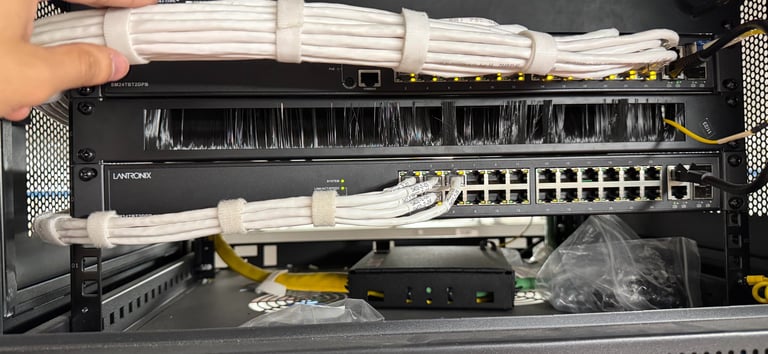
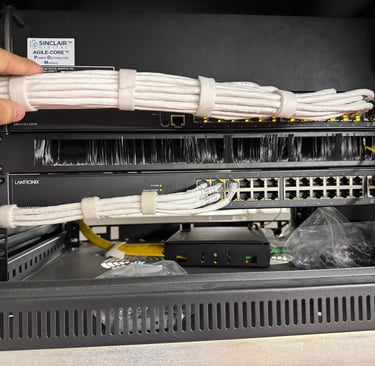
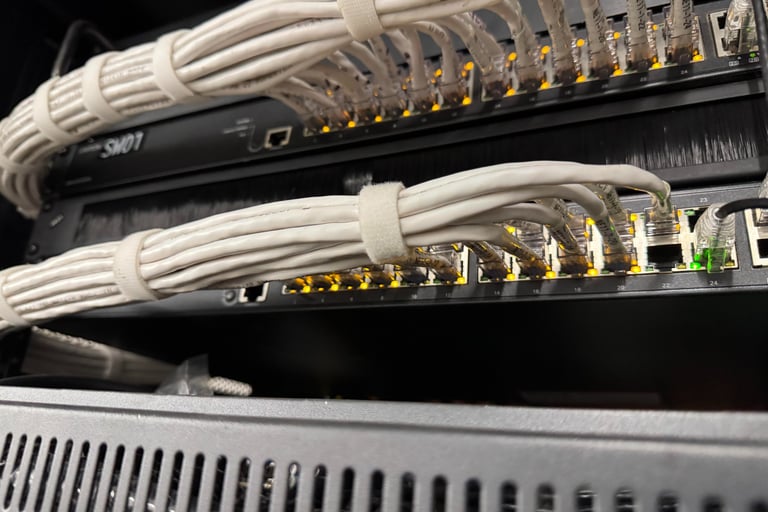
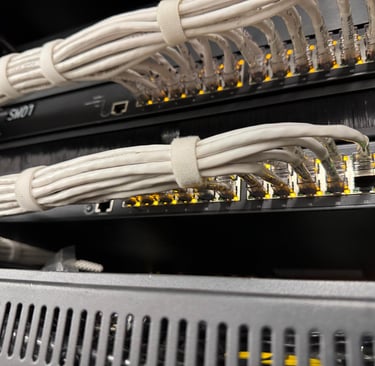
Helped the implementation of a POE lighting system at Mouser Electronics, utilizing a headend rack to connect multiple mini-IDFs located in the ceiling. Each mini-IDF contains two 24-port POE Lantronix switches connected to a VoltServer connection, providing DC POE directly from the headend. Each port supplies up to 90W of power, supporting two daisy-chained lights connected to a device node. The network spans approximately 48 IDFs and supports up to 3,000 device nodes, requiring a robust and sustainable network infrastructure to ensure seamless communication between all lights and devices.


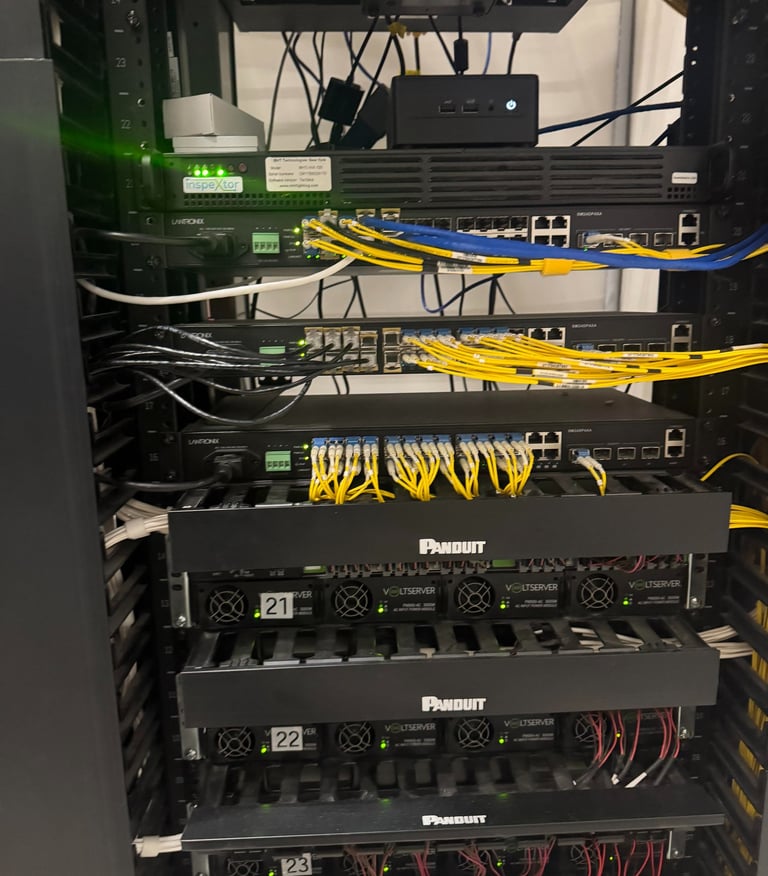
The headend consists of three 24-port Lantronix switches using fiber SFPs to distribute the network to the mini-IDF locations. Fiber was employed to provide high-speed, reliable connectivity between the lighting systems and the server. Beneath the switches, VoltServer Class 4 transmitters deliver 57V DC power to each mini-IDF switch via VoltServer receivers, ensuring consistent PoE delivery throughout the system.